TestMyApps Managed Closed Testing and App Release QA
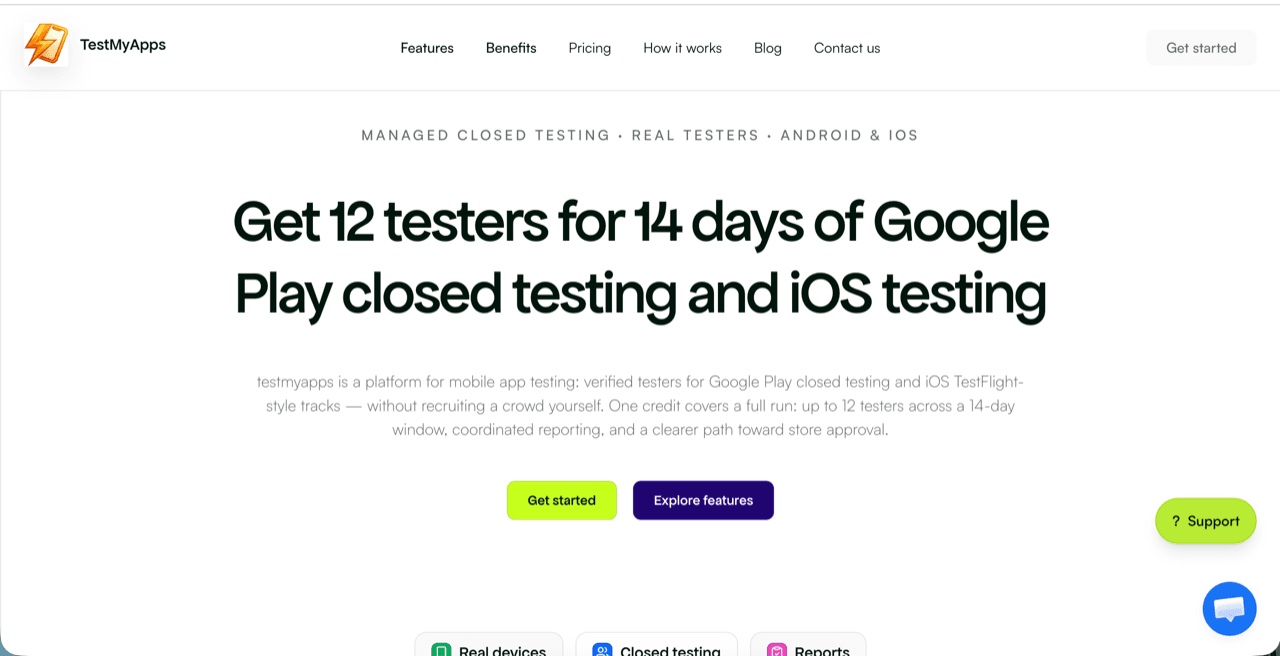
TestMyApps is built for founders, agencies, and mobile teams who need reliable verified testers, cleaner QA notes, and a calmer path through Google Play closed testing, TestFlight checks, and production launch.
1. Why TestMyApps exists
Mobile app review is no longer a simple upload-and-wait process. Google Play closed testing, staged rollouts, iOS TestFlight checks, and real-device QA all require planning before launch week. A team that waits until the final build often loses time finding testers, collecting proof of usage, and turning scattered feedback into useful release decisions. TestMyApps solves that operational gap by giving teams a managed workflow for tester coordination, usage evidence, structured feedback, and launch readiness reporting.
The goal is practical: help app owners avoid last-minute rejection loops and release uncertainty. TestMyApps is especially useful when a founder or agency has a working product but needs reliable external validation before submitting to the stores or handing the app to a client.
2. The managed testing workflow
A strong app testing workflow starts with a clear build, target devices, core user journeys, and a defined testing window. Teams submit those details, then TestMyApps coordinates a verified tester cohort through the required flows. Instead of relying on casual messages, the process creates a cleaner signal around install success, onboarding, feature completion, account creation, checkout or form flows, crashes, visual issues, and confusing copy.
This matters because closed testing is not only about getting people to open the app. Review confidence improves when teams can show meaningful activity, feedback, and fixes. A managed system makes that evidence easier to collect and easier to explain.
3. Proof and reporting that holds up
Closed testing is not just about volume. It is about documented usage, observable feedback, and a release narrative that a product owner can trust. TestMyApps turns tester activity into structured reporting, including what was tested, what failed, what was confusing, and what appears ready for the next release step.
This reporting is valuable for product teams, solo founders, and client-facing agencies. It gives stakeholders a concise view of release risk without forcing them to read every message, screenshot, or bug note individually.
4. Who benefits most
Early-stage teams benefit when they need app store readiness but do not yet have a large user base. Agencies benefit when a client launch requires independent testing evidence. Product teams benefit when a mobile release has critical paths that must work across devices, accounts, permissions, and network conditions. In each case, TestMyApps reduces coordination work and improves the quality of launch decisions.
The platform is also useful for teams that already have internal QA. External testers can still reveal onboarding problems, copy issues, confusing navigation, and real-world usage patterns that internal teams often miss because they already understand the product.
5. How this connects to ClyroLabs product engineering
ClyroLabs builds products with launch operations in mind. A mobile app is not production-ready only because the code compiles. It also needs release documentation, test coverage, analytics, error handling, user feedback, and a clear path from review to iteration. TestMyApps supports that final release layer by giving mobile teams a focused system for external validation.
For delivery planning and scope control, read the ScopeTracker product breakdown. For earlier product planning, the MVP delivery guide explains how to reduce rework before launch. For backend planning, the API-first SaaS architecture guide covers foundations that help products scale after validation.
6. SEO and authority benefits
Product authority improves when useful pages connect clearly to the problems people search for. This article links TestMyApps with topics like Google Play closed testing, mobile app QA, verified testers, TestFlight checks, release readiness, and launch reporting. It also connects the product to related ClyroLabs engineering content so search engines and readers can understand the broader product story.
The strongest SEO value comes from content that is genuinely useful: clear headings, specific use cases, internal links, product screenshots, descriptive metadata, and relevant backlinks. TestMyApps should keep publishing practical release notes, tester workflow guides, app review checklists, and lessons from real testing runs.
7. Share and follow TestMyApps
Ready to validate your next release? Start with TestMyApps and use a managed testing workflow for better release confidence. Follow TestMyApps on X, Instagram, and Reddit for product updates, testing guidance, and community discussion.
8. Get started
If your release checklist includes external validation, closed testing proof, or a clearer launch readiness report, TestMyApps is built for that job. Visit get 12 testers for 14 days or Google Play closed testing on testmyapps.app to plan a testing run and use ClyroLabs engineering content to strengthen the rest of your product delivery workflow.