ScopeTracker Deep Dive: How the Product Turns Scope Chaos Into Daily Clarity
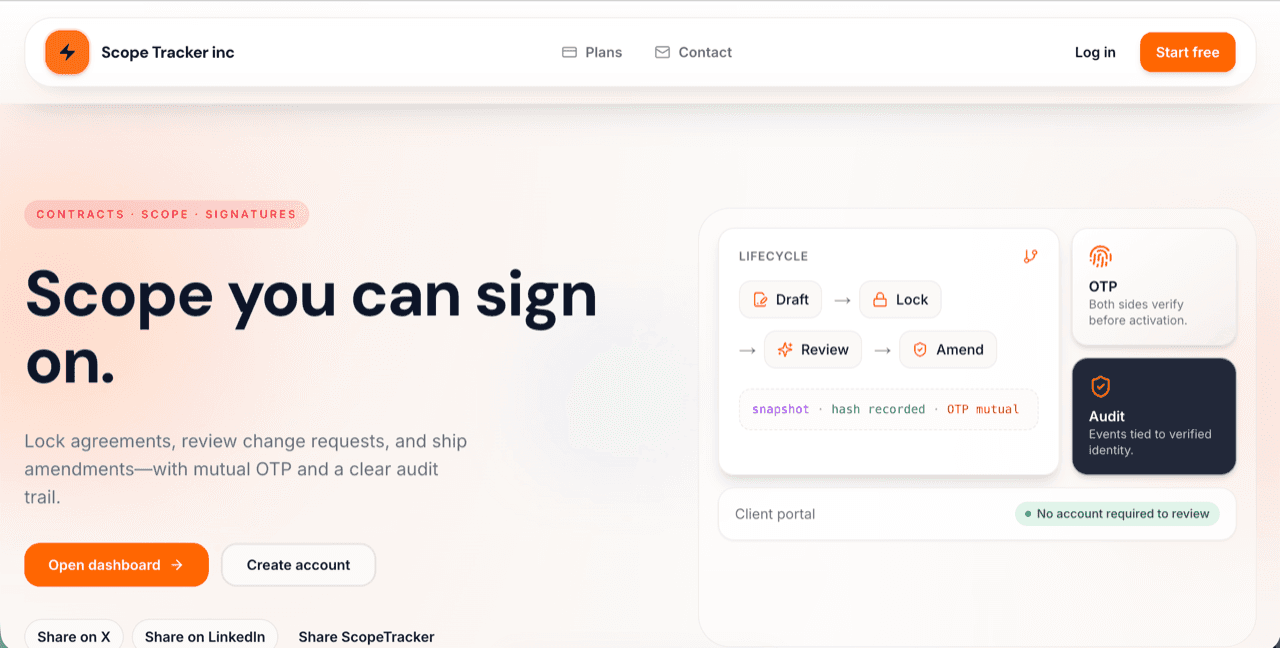
ScopeTracker is designed for teams that lose momentum when scope changes are scattered across chat, docs, and task boards. The product creates one operational loop that connects project intent, daily execution, and delivery confidence.
1. What problem ScopeTracker solves
Most teams fail on delivery because scope becomes a moving target. New requests appear mid-sprint, assumptions stay undocumented, and status updates become subjective. ScopeTracker provides a shared scope baseline and enforces visibility around every change request.
The core value is reducing ambiguity. Instead of asking “Where are we?”, teams can instantly verify: planned deliverables, current execution state, blockers, and risk signals.
2. The operating model
ScopeTracker runs on a three-layer model. Scope layer defines what must ship. Execution layer tracks implementation progress by owner and phase. Evidence layer stores proof of completion through notes, linked artifacts, and status transitions. This model keeps status reporting tied to objective signals.
3. Day-to-day workflow
Teams begin by opening active workstreams and verifying current scope commitments. During execution, each task update records owner, confidence level, and delivery risk. Review checkpoints surface drift early so decisions are made before timelines collapse.
At the end of each cycle, ScopeTracker generates a concise project narrative: what moved, what is at risk, and what decisions are required next. This replaces fragmented standup notes with one decision-ready view.
4. Why this matters for delivery teams
ScopeTracker improves delivery quality in two ways. First, it prevents silent scope expansion by forcing explicit change tracking. Second, it makes accountability visible without adding process overhead. The result is a calmer execution rhythm and stronger predictability for founders, PMs, and engineering leads.
5. Product takeaway
ScopeTracker is not just another task board. It is a scope governance layer built for teams that need consistent output under evolving requirements. If your team is spending more time syncing than shipping, this workflow model gives you a direct operational advantage.
Related: TestMyApps release readiness
If you are shipping mobile products and need verified testers for closed testing, explore TestMyApps for a managed testing workflow that supports release approval.